
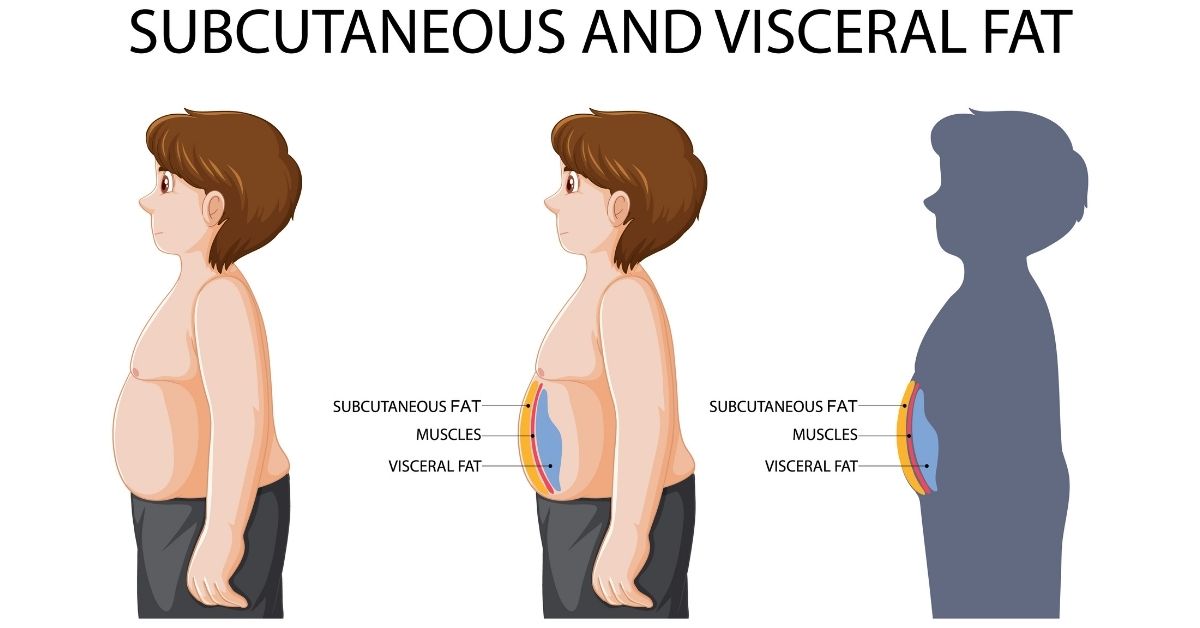
Here’s something most people with histamine intolerance never hear from their doctors: your fat tissue isn’t just sitting there. It’s active, hormonal, inflammatory. And yes. There’s growing evidence that it can make your histamine symptoms noticeably worse.
Let’s look more closely at the link between histamine intolerance and visceral fat (visceral adiposity) and why you should focus on reducing deep belly fat if you have histamine intolerance.
What is Visceral Fat?
Visceral fat is the deep, internal fat that wraps around your organs. It’s the kind you can’t pinch between your fingers but can absolutely feel the effects of.
Unlike the softer, more superficial fat subcutaneous fat just under your skin, visceral fat behaves more like an endocrine organ.
It releases inflammatory signals, interacts with hormones, and influences everything from insulin sensitivity to histamine load. In clinical practice, it’s the form of fat that quietly drives the most metabolic mischief, like insulin resistance.
Think of visceral fat like a crowded basement full of old wiring. From the outside, the house looks fine. But down below, those wires are sparking, overheating, and sending out chaotic signals through your whole body.
You don’t always see the chaos but just notice the lights flickering, the appliances acting up, the energy bill creeping higher. That’s what visceral fat does inside the body: hidden, reactive, and capable of disrupting systems you wouldn’t immediately connect to “belly fat.”
How Visceral Fat Increases Histamine Intolerance: The Mast Cell and DAO Connection
Deep belly fat is loaded with mast cells, the same cells that store and release histamine. People with more visceral fat have far more mast cells, and those cells are “jumpier” and more reactive.
They degranulate in response to metabolic stress, inflammation, and even the process of digesting fat. More visceral fat means you’re releasing more histamine throughout the day. (And night)
Plus, visceral fat pumps out inflammatory cytokines like TNF‑α, IL‑6, and IL‑1β. Those signals damage the intestinal villi. This is the exact place where your body makes diamine oxidase (DAO), the enzyme that clears dietary histamine.
So, you get a double hit: more histamine produced internally, and less DAO available to neutralize what you eat. It’s not random; it’s a metabolic setup that keeps you stuck.
Insulin resistance tightens the loop. High insulin levels suppress DAO through a separate pathway, so now you’re dealing with more histamine, less clearance, and a leakier gut absorbing more of it.
So, visceral fat makes managing histamine intolerance more challenging.
How Belly Fat Fuels Histamine Intolerance: The Bidirectional Loop You Need to Know
The connection between visceral fat and histamine intolerance goes both ways. Visceral fat raises histamine, but histamine also encourages visceral fat growth. It activates H1 and H2 receptors on fat cells, pushing them toward inflammation and fat storage.
Histamine even influences your sleep habits and appetite through it effect on your brain.That’s one reason antihistamines are so linked to weight gain. And what does weight gain do? It increases visceral fat, not what you want.
Does Histamine Cause Weight Gain Directly?
You might wonder whether histamine itself causes weight gain? Studies suggest that histamine itself doesn’t directly cause weight gain. In fact, histamine can act as an appetite suppressant. It even accelerates fat breakdown, a process called lipolysis. But as with most things in science, it’s not as straightforward as you would hope.
Research suggests that despite histamine not directly causing weight gain, it may do so indirectly through other mechanisms, by triggering chronic inflammation, stress hormone dysregulation, sleep disruption, and impaired gut function. Fortunately, lowering your body’s histamine burden may help restore a healthier balance and help with weight control.
Plus, a low histamine diet can also cause weight gain if you shift to a high-glycemic diet to avoid histamine triggers. A high-glycemic diet that causes blood sugar spikes, would, over time, lead to insulin resistance and an increase in visceral fat.
That’s why it’s wise to stick to low-histamine, unprocessed foods as much as possible. It’s better for histamine balance and for your metabolic health.
Why Reducing Visceral Fat Helps Histamine Intolerance: A Clinician’s Breakdown
So, here’s the take-home message. If you’re dealing with histamine issues, reducing visceral fat isn’t just a “healthy lifestyle” suggestion — it’s a way to reduce a trigger you might not have been aware of.
Less visceral fat means fewer mast cells firing off histamine and a better chance for your gut lining to recover and rebuild DAO. It becomes a targeted strategy, not a vague wellness tip.
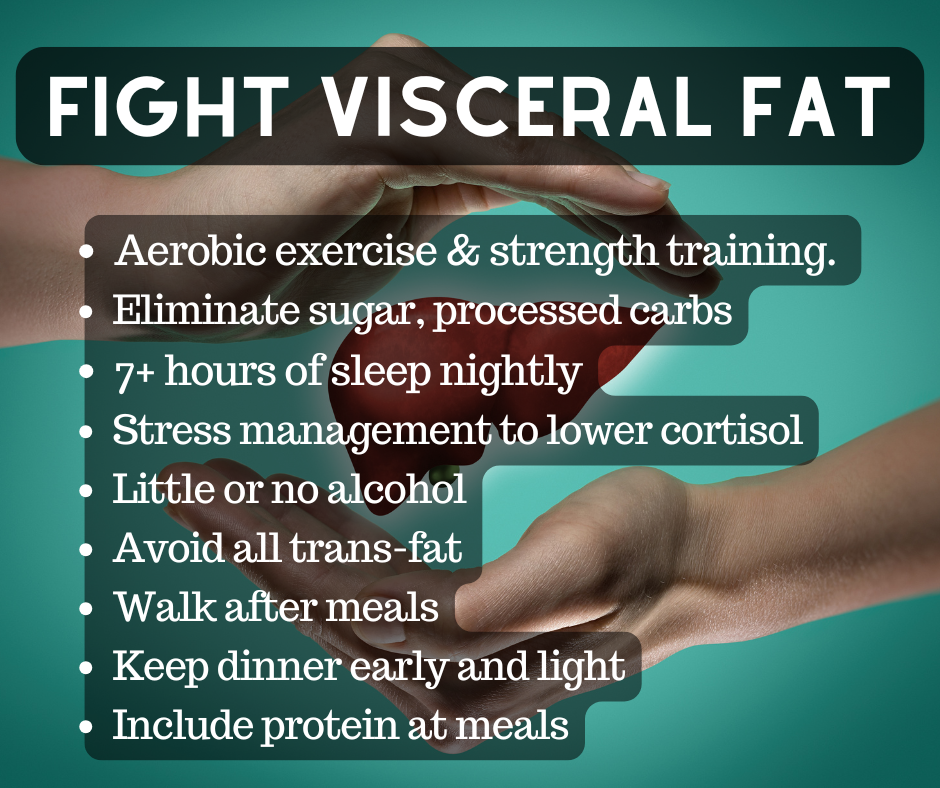
Reduce Visceral Fat for Health and Histamine Balance
When we talk about visceral fat in the context of histamine intolerance, the goal isn’t perfection. It’s lowering the inflammatory “background noise” your body is deals with every day.
The good news is that visceral fat responds remarkably well to consistent, doable lifestyle shifts. You don’t need extreme protocols or complicated routines; the basics, done steadily, create the biggest metabolic changes.
The graphic above is a simple visual overview of the habits that move the needle most. Think of them as levers that calm inflammation, support better insulin signaling, and give your gut and mast cells a quieter environment to work in.
The good news? Even small improvements in these areas can make histamine symptoms noticeably easier to manage over time.
How Long Does It Take to Reduce Visceral Fat for Histamine Control?
Despite the bad news about visceral fat, there’s also good news. As mentioned, it’s easier to lose visceral fat than it is subcutaneous fat, the superficial type you can pinch between your fingers. The reason? Visceral fat has a high density of beta-andrenergic receptors that tell your body to break down fat stores. So, it responds quicker to lifestyle changes.
Studies show, and I’ve seen in clinical practice that people can significantly reduce visceral fat 12 weeks. Research shows that a combination of dietary changes and exercise works better than focusing only on diet. And high-intensity exercise has an advantage over lower intensity workouts. (For visceral fat loss)
But keep in mind, that high-intensity exercise can trigger or worsen histamine intolerance symptoms, so keep the intensity at the low end and focus on getting enough sleep and stress management.
For my patients, I often recommend starting with Zone 2 walking or swimming to reduce visceral fat without crossing the ‘histamine threshold’ that high-intensity sprints can trigger. I recommend keeping a fitness diary to see how your body responds to various forms of exercise. Walking is always a good start.
References:
- Divoux, A., Moutel, S., Poitou, C., Lacasa, D., Veyrie, N., Aissat, A., Arock, M., Guerre-Millo, M., & Clément, K. (2012). Mast Cells in Human Adipose Tissue: Link with Morbid Obesity, Inflammatory Status, and Diabetes. The Journal of Clinical Endocrinology & Metabolism, 97(9), E1677–E1685. https://doi.org/10.1210/jc.2012-1532.
- Front. Endocrinol., 26 June 2023. Sec. Neuroendocrine Science. Volume 14 – 2023 | https://doi.org/10.3389/fendo.2023.1202089
- Elieh Ali Komi D, Shafaghat F, Christian M. Crosstalk Between Mast Cells and Adipocytes in Physiologic and Pathologic Conditions. Clin Rev Allergy Immunol. 2020 Jun;58(3):388-400. doi: 10.1007/s12016-020-08785-7. PMID: 32215785; PMCID: PMC7244609.
- Comas-Basté O, Sánchez-Pérez S, Veciana-Nogués MT, Latorre-Moratalla M, Vidal-Carou MDC. Histamine Intolerance: The Current State of the Art. Biomolecules. 2020 Aug 14;10(8):1181. doi: 10.3390/biom10081181. PMID: 32824107; PMCID: PMC7463562.
- Jørgensen EA, Knigge U, Warberg J, Kjaer A. Histamine and the regulation of body weight. Neuroendocrinology. 2007;86(3):210-4. doi: 10.1159/000108341. Epub 2007 Sep 11. PMID: 17848791.
- Abdullah SR, Nur Zati Iwani AK, Ahmad Zamri L, Wan Mohd Zin RM, Abu Seman N, Zainal Abidin NA, Hamzah SS, Azizul NH, Omar A, Seman Z, Yahya A, Md Noh MF. Visceral adiposity loss is associated with improvement in cardiometabolic markers: findings from a dietary intervention study. Front Endocrinol (Lausanne). 2025 Jun 4;16:1576599. doi: 10.3389/fendo.2025.1576599. PMID: 40535330; PMCID: PMC12173930.
- Recchia F, Leung CK, Yu AP, et al. Dose–response effects of exercise and caloric restriction on visceral adiposity in overweight and obese adults: a systematic review and meta-analysis of randomised controlled trials. British Journal of Sports Medicine 2023;57:1035-1041.
Kristie Leong M.D. M.S.

Hi! I'm Dr. Kristie Leong M.D. M.S. I graduated from Virginia Commonwealth University and have a deep interest and passion for histamine intolerance. My journey includes a comprehensive Kindle ebook on Histamine Intolerance and its dietary management.With a Masters in Clinical Pathology, my knowledge of immunology adds a robust scientific foundation to my expertise. I wholeheartedly believe in the power of lifestyle and prevention in healthcare. Let's work together to manage histamine intolerance through practical dietary and lifestyle choices. :-)